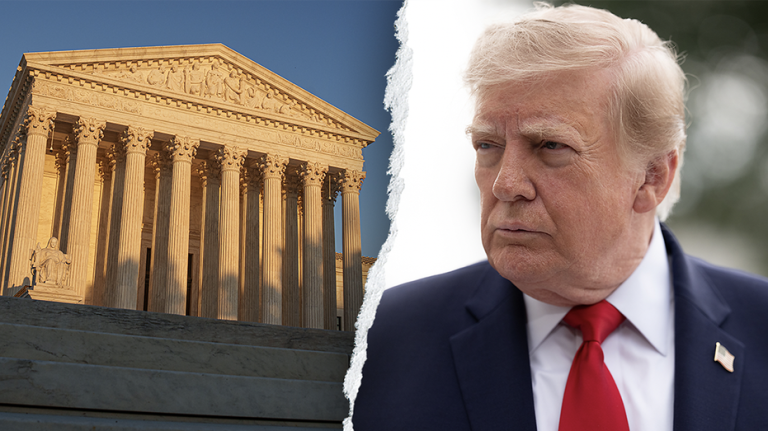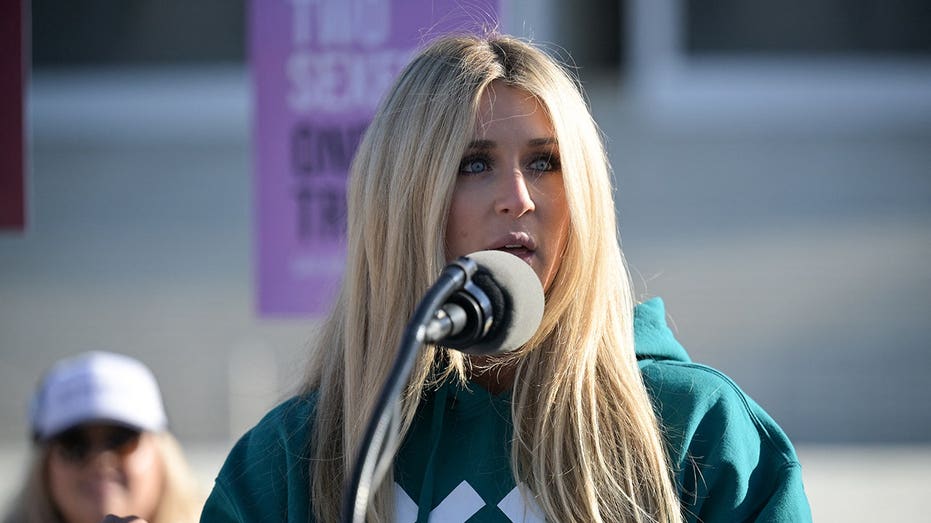

The NCAA defended its record on women’s sports after a federal judge dismissed Riley Gaines’ Title IX lawsuit against the organization, emphasizing its current compliance with President Donald Trump’s executive order without directly addressing the allegations underlying the case.
“The NCAA is proud to continually invest in and expand women’s sports and the NCAA is in full compliance with the Trump administration’s executive order on women’s sports,” the organization said in a statement.
The Independent Council on Women’s Sports (ICONS) responded to the NCAA statement in a social media post later on Tuesday.
“No promises to women. No assurances. No accountability. The weakest possible response: empty words on a page,” the organization wrote.
The response came one day after U.S. District Judge Tiffany R. Johnson granted summary judgment to the NCAA on the lawsuit’s remaining Title IX claims and directed the clerk to close the case.
SUPREME COURT MAKES RULING ON TRANS ATHLETES IN WOMEN’S SPORTS
Johnson did not determine whether the NCAA’s former transgender-athlete policies discriminated against female athletes. Instead, the Biden-appointed judge concluded that the evidence did not establish the NCAA as a recipient of federal financial assistance, a requirement for liability under Title IX.
Gaines and more than a dozen other current and former female college athletes sued the NCAA in March 2024. They alleged the organization violated their Title IX rights through policies that allowed biological males to compete in women’s events and enter women’s locker rooms.
The case focused heavily on the 2022 NCAA Division I Women’s Swimming and Diving Championships, where former University of Pennsylvania swimmer Lia Thomas won the 500-yard freestyle and shared a locker room with female competitors. Gaines, then representing Kentucky, tied Thomas for fifth place in the 200-yard freestyle.
Gaines and the Independent Council on Women’s Sports, which funded the lawsuit, announced Monday that the plaintiffs intend to appeal the ruling to the 11th U.S. Circuit Court of Appeals.
“This momentary setback will not deter me or other women athletes in the least,” Gaines said. “Rest assured, we will be appealing this decision.”
The NCAA’s statement did not address the planned appeal, the plaintiffs’ criticism of its previous policy or whether the organization maintains that it is categorically beyond Title IX’s reach.
The ruling centered on the NCAA’s concussion-research collaboration with the Department of Defense. The plaintiffs argued that the arrangement made the organization an indirect recipient of federal funding.
Johnson found that the NCAA and the Defense Department maintained separate funding streams, with both contributing money to Indiana University for research conducted through the Concussion Assessment, Research and Education Consortium.
“Here, there is no evidence that the NCAA ever received, or could have received, federal funds,” Johnson wrote. “Thus, Plaintiffs’ Title IX claims cannot proceed.”
The policy challenged by Gaines and the other athletes is no longer in effect. Trump signed his “Keeping Men Out of Women’s Sports” executive order on Feb. 5, 2025, directing federal agencies to enforce Title IX based on biological sex.
The NCAA changed its participation policy the following day, limiting competition on women’s teams to athletes assigned female at birth. The current rules contain no waiver allowing athletes assigned male at birth to compete on women’s teams, although they may practice with those teams and receive benefits such as medical care while practicing. See ncaa.org.
ICONS co-founders Kim Jones and Marshi Smith have argued that the NCAA’s successful position that it was not covered by Title IX demonstrates that Congress should not provide the organization with additional authority through the Protect College Sports Act.
Smith said the NCAA “cannot be trusted to regulate anyone’s sports — men’s or women’s” and urged members of Congress to oppose the legislation after it passed the Senate on Monday.
The case’s appeal could now ask the 11th Circuit to decide whether the NCAA’s collaboration with the Defense Department, or its relationship with federally funded entities involved in the research, is sufficient to bring the organization within Title IX’s reach.